By Rodrigo Fernandes, Brazilian 3rd-degree black belt, a father himself and coach of kids and adults for more than 15 years – Head Coach at BJJ DOJO Berlin (Checkmat).
It’s an issue in our house too
“I don’t want to go to training today.” As a coach I hear that sentence almost every week – from parents telling me what their child said. And I hear it at home too: for three years I’ve been wrestling with my daughter over exactly this question. So I know how exhausting it is.
Still, I want to say something clearly that many parents don’t like to hear: your child not feeling like it is normal. It’s not a sign that jiu-jitsu is the wrong thing. It’s a sign that training is work.
Motivation doesn’t fall from the sky
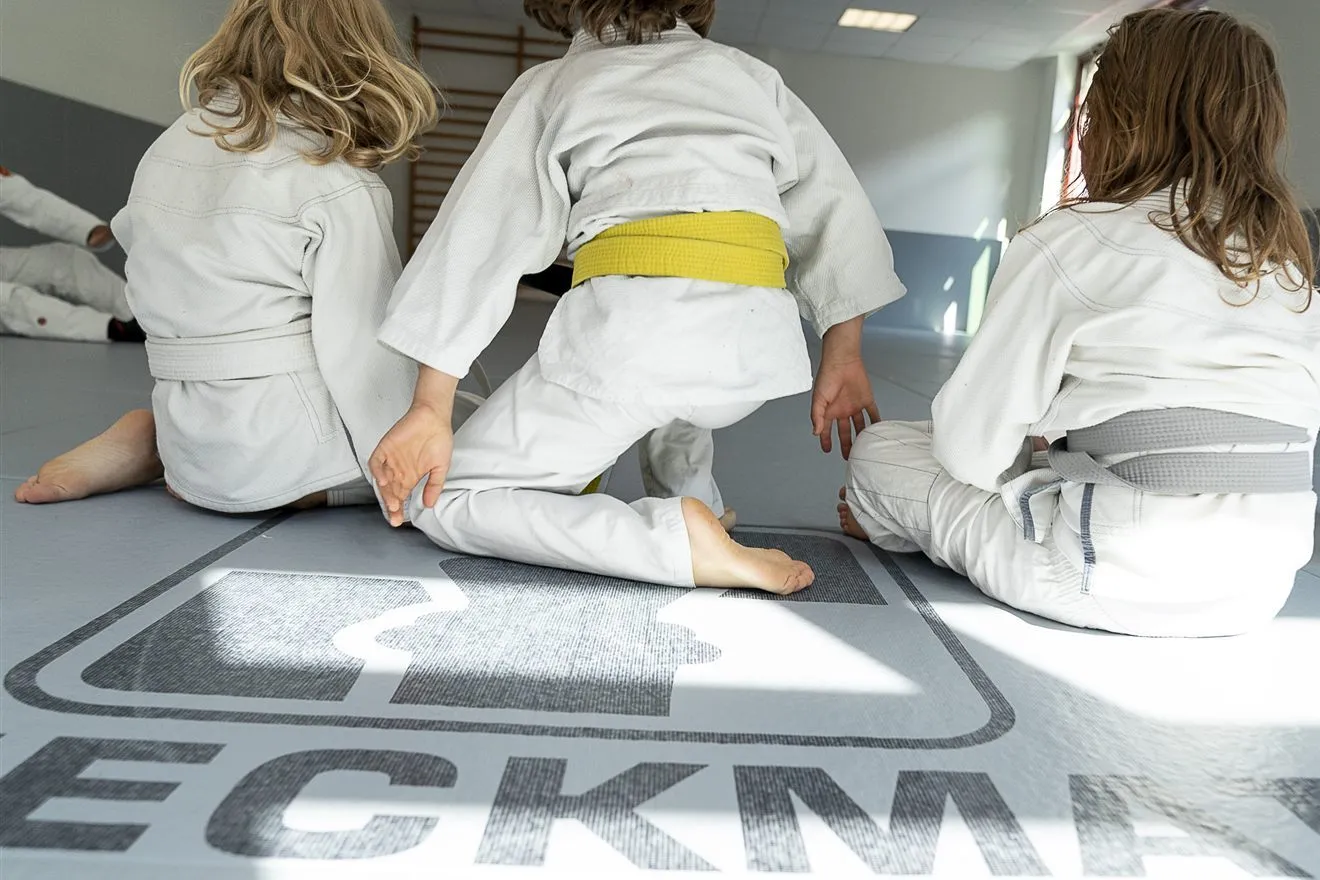
Let’s look at what a training session means for a child. They have to stop playing, get dressed and make it to the dojo. There they change, tie their belt and step onto the mat.
Then they have to move in front of others, try new things, make mistakes and grapple with someone who might be stronger. That’s a lot – for a child, for an adult, for anyone. If you go to the gym yourself, you know the feeling.
Even so, many parents expect their child to run to every class full of enthusiasm. That rarely happens. Motivation isn’t something a child is born with. And it isn’t a requirement for going: often it only shows up once you’re already there.
Like nursery, school and brushing teeth
Many children don’t want to go to nursery or school in the morning. Most parents take them anyway. Not out of harshness, but because they’ve learned: this matters, and it gets easier when it happens regularly.
Brushing teeth is the same. Hardly any child enjoys brushing their teeth. We insist anyway, every evening, until it’s second nature. Nobody says: “My child doesn’t feel like it, so we’ll skip it.”
With sport, many parents suddenly switch modes. The child says “I don’t want to” twice, and they’re taken out. If you show the same calm consistency with training as you do with school, it works in most cases. I’ve seen that on the mat for more than 15 years.
What a child learns when we give up at the first “no”
If we take a child out at the first sign of resistance, they don’t learn “jiu-jitsu isn’t for me”. They learn: when something gets hard, I stop – and my parents help me do it.
That lesson sticks. I see it in adults who come to us: anyone who never experienced as a child that sticking with something pays off struggles with every routine later on. The sofa always costs less energy than the mat.
Psychologist Angela Duckworth (University of Pennsylvania), who has researched perseverance for years, has a simple family rule for this: you’re allowed to quit – but not on a hard day. That’s exactly the point. A child may decide one day that jiu-jitsu isn’t their path. But not on the afternoon when they’re tired and would rather play.
The reward comes afterwards
The good feeling rarely comes before training. It comes afterwards: when you’ve pushed yourself, made the trip, got changed, been on the mat and seen the class through. That satisfaction is the real reward. It’s exactly what a child misses when they stay at home.
I know this from my own daily life. Tidying a messy kitchen is a chore and costs energy. I do it anyway, because it became a routine long ago. And when it’s clean, it feels good.
Jiu-jitsu isn’t a theme park where every minute is fun. Raising children is, to a large extent, about repeating things that cost energy but are right, until they become second nature. Children can learn this – if we get them to that good feeling afterwards often enough.
Eight tools: routine instead of motivation
Motivation is the wrong word. The point is to anchor a routine in your child’s head. These tools help.
- Fixed days, no negotiating. Training is in the weekly plan, just like school. Don’t ask “Do you want to go today?” – say “We’re leaving at half past four.” An open question invites a no.
- Quit only at a fixed point. Agree on a period, for example until the end of the school term. After that, decide together. Never on a bad day.
- Think in months, not weeks. In a study from University College London it took 66 days on average for a new daily habit to become automatic. So two training sessions tell you nothing. One missed session doesn’t break the routine; many missed ones do.
- Make the journey easier, not the training. Often tiredness or hunger after school is the real problem. A snack, a bag packed the evening before and a little calm before leaving solve more than any discussion.
- One joker per term. Developmental psychologist Moritz Daum (University of Zurich) suggests giving the child a joker every few months: skip one session without giving a reason. The child has to weigh whether the joker is worth using today. If they use it, respect that.
- Praise showing up, not talent. In a well-known experiment by Mueller and Dweck (1998), children praised for their effort went on to choose harder tasks than children praised for being clever. So don’t say “You’re so great” – say “You went even though you didn’t feel like it.”
- Remind them of the feeling afterwards. “How did you feel after training last time?” Most children come off the mat satisfied. They’re allowed to hear that again before the next session.
- Do something hard yourself. In Duckworth’s family the rule applies to everyone, parents included. Children notice exactly whether we stick with things ourselves.
One more point belongs here: not feeling like it isn’t the same as a real problem. Parents don’t always need to take single bad days seriously, says Hamburg sports educationalist Alfred Richartz. But if your child shows fear for weeks, is in pain or mentions a conflict with another child, talk to us. Then we’ll solve it together.
What we contribute at the dojo
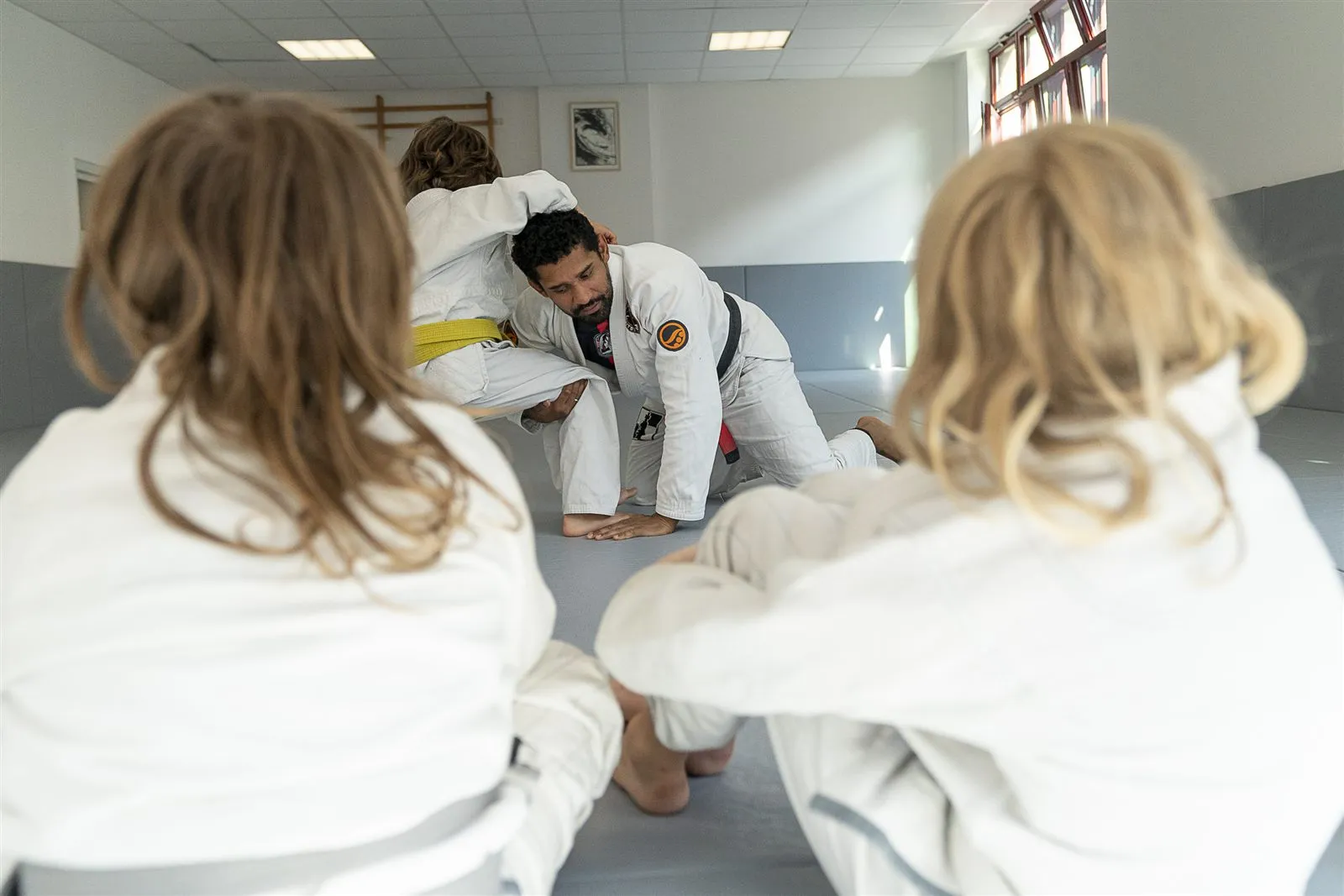
Kids train with us in age groups: 4–6, 6–9, 9–12 and 12–15 years. We expect effort, and we see every child individually. It’s not about producing fighters – it’s about a child growing through challenges.
The part at home – the fixed routine, the way to the mat – only you can do. If it gets stuck, talk to us before or after training.
Your child has never done jiu-jitsu? Book a trial class
Sources
- Angela Duckworth on perseverance and quitting: ParentCo., based on a New York Times report
- Phillippa Lally et al., habit formation: UCL News, 4 August 2009
- Moritz Daum interviewed by ZEIT ONLINE (German), 3 February 2025: University of Zurich (PDF)
- Mueller & Dweck, Praise for Intelligence Can Undermine Children’s Motivation and Performance, 1998: PDF
- Alfred Richartz (University of Hamburg) on motivation in kids’ sport (German): heidelberg24