Short answer: Yes, BJJ is hard – especially in your first weeks. You use muscles you didn’t know you had, you tense up, and you’re out of breath after a few minutes of sparring. But that’s less about fitness and more about missing technique. After about two to three months it gets noticeably easier, because you learn to stay relaxed and breathe properly.
By Rodrigo Fernandes, Brazilian 3rd-degree black belt, training BJJ since 2001 – Head Coach at BJJ DOJO Berlin (Checkmat).
Why BJJ feels so hard at the start
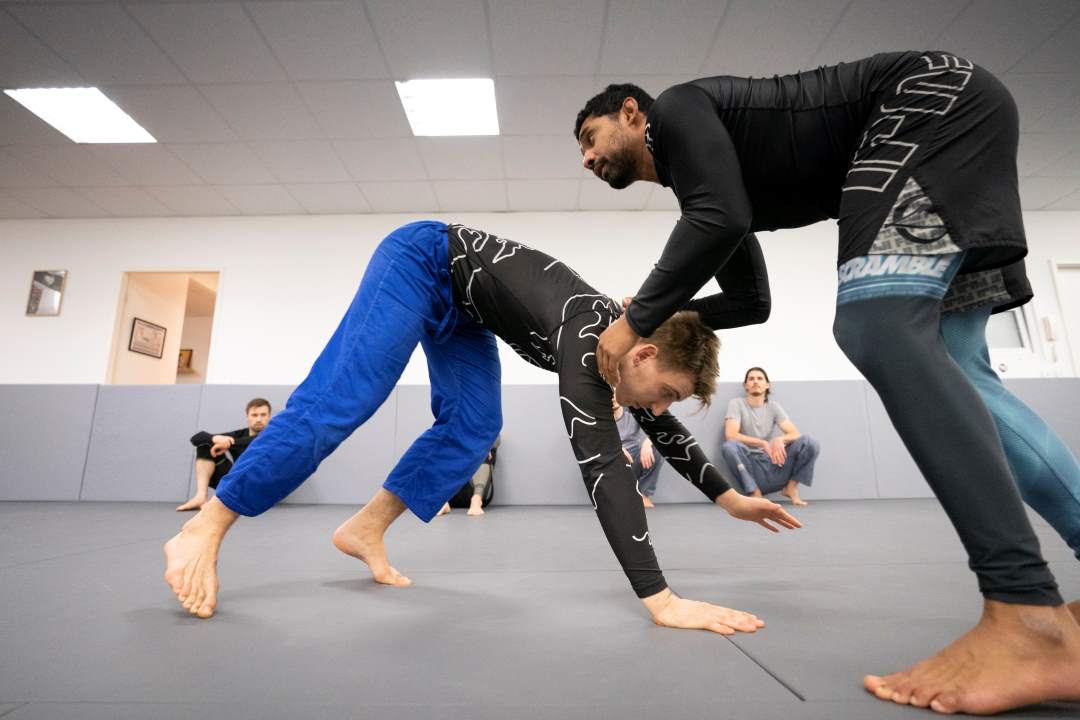
Almost every beginner does the same thing in their first sparring round: push with everything, hold their breath and gas out after two minutes. That’s completely normal. Your body doesn’t know this kind of effort yet – pulling, pushing, twisting, all at once and against resistance.
Then there’s your head: you don’t know what to do yet, so you try to solve everything with strength. That burns energy. The experienced partner next to you looks almost relaxed – not because they’re fitter, but because they know when strength is needed and when it isn’t.
What you’ll feel in the first weeks
- Sore muscles in places you didn’t know about: neck, forearms, hips, core.
- Burning fingers and forearms from gripping – especially in the gi.
- Out of breath after short rounds, because you hold your breath.
- A full head: lots of new terms and movements. That’s tiring too.
All of this passes. After a few weeks your body adapts; after a few months you learn how to save energy in BJJ.
When does it get easier?
For most people, after two to three months of regular training. You breathe more calmly, move more efficiently and know which positions let you rest. Honestly, BJJ never becomes “easy” – you just start training with better people. But it stops feeling like a fight for survival and starts feeling like a game.
Do I need to be fit before I start?
No. BJJ gets you fit, not the other way round. Plenty of people start after years without any sport. What matters is starting at your own pace – that’s why we run a beginners course in small groups, with no free sparring at the start.
Tips for beginners
- Breathe. Sounds obvious, but it’s the most important tip. Breathing out keeps you from tensing up.
- Stay loose. Only tense what you need right now.
- Tap early. Ego costs energy and causes injuries. Tapping is part of learning.
- Come regularly. Twice a week beats three times in a row once a month. More in How often should you train BJJ?
- Sleep and hydrate. Recovery decides how you feel in the next class.
Is BJJ only for men?
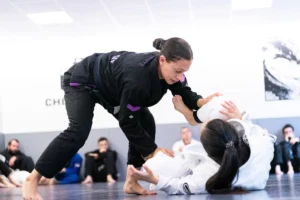
Not at all. BJJ is popular with women precisely because technique matters more than strength. At our academy women train in the mixed classes and every Saturday in our women’s class.
Frequently asked questions
How hard is BJJ compared with other sports?
Very. An hour of BJJ with sparring works strength, endurance and mobility at the same time – comparable to wrestling or judo, and far more intense than most gym classes.
How many calories does BJJ burn?
Depending on intensity and body weight, roughly 500 to 900 calories per hour – more with lots of sparring.
Is BJJ good for weight loss?
Yes. BJJ burns a lot of calories and builds muscle at the same time. Many people see clear changes after a few months, especially with regular training, good sleep and sensible eating.
How do I deal with soreness after my first BJJ class?
Light movement, enough water and sleep. Soreness drops a lot after the first few weeks. Come back anyway – that’s the best way to get rid of it.
Can I start BJJ if I’m out of shape?
Yes. Fitness comes with training. A beginners course without free sparring is the ideal way in.
Is BJJ harder than boxing or Muay Thai?
It’s hard in a different way. There’s no getting hit, but grappling is extremely demanding on your whole body and on your problem-solving. Many people find BJJ more tiring at first because they don’t yet know how to relax under pressure.
Try it yourself
The best way to find out how hard BJJ is for you is on the mat. At BJJ DOJO Berlin in Kreuzberg your first class is free – and taught in English if you need it. Book a free trial class →