Short answer: The best self-defence for women is the one you train regularly against real resistance. Brazilian Jiu-Jitsu (BJJ) is especially well suited because it relies on technique and leverage rather than strength, and because sparring teaches you to stay calm under pressure. A weekend course can be a good start – but real confidence comes from months and years of training.
By Rodrigo Fernandes, Brazilian 3rd-degree black belt, training BJJ since 2001 – Head Coach at BJJ DOJO Berlin (Checkmat). I worked in security in rough areas for six years; this article is my honest view of what counts when it’s real.
Self-defence for women in Berlin: women’s class every Saturday at BJJ DOJO Berlin in Kreuzberg – small groups, no experience needed, first class free. More about the women’s class →
Self-defence is not a trick
Lots of courses promise that a few hours will teach you to handle any attacker. That simply isn’t honest. In a real threat, adrenaline floods your body, your hands shake and your vision narrows. Complicated techniques you practised once in a course are gone.
What’s left is what your body has done a thousand times. That’s why I say self-defence is the result of training. From my years in security I know that the adrenaline of a real confrontation feels very similar to a hard sparring round or a competition. People who experience that regularly can still act when it matters.
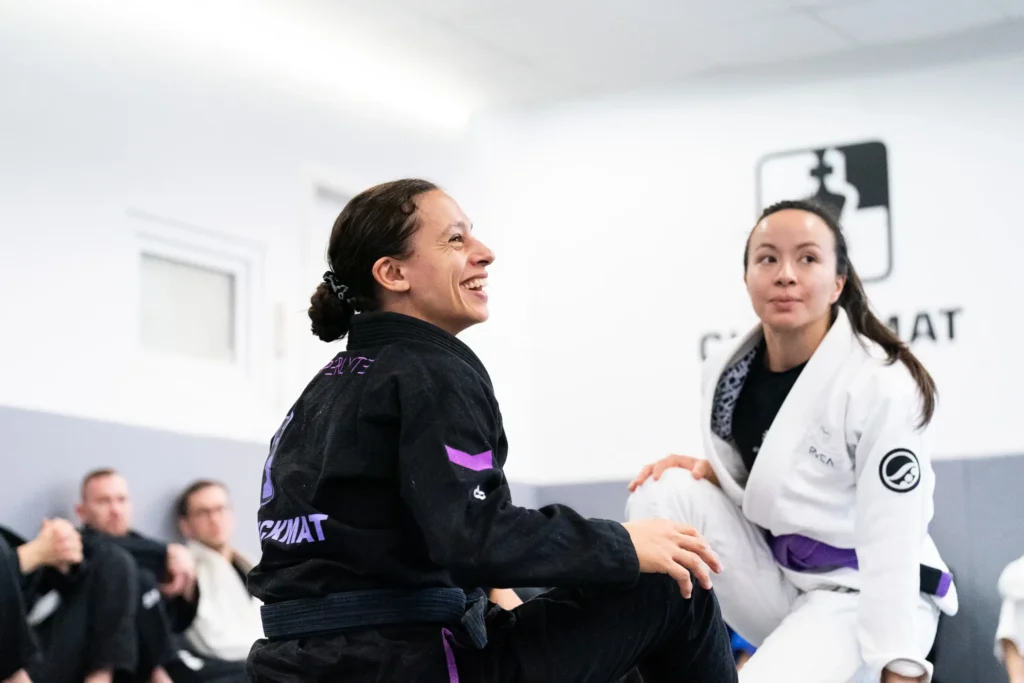
Why BJJ works so well for women
- Technique over strength: BJJ was built so smaller people can beat bigger ones – using leverage, angles and timing.
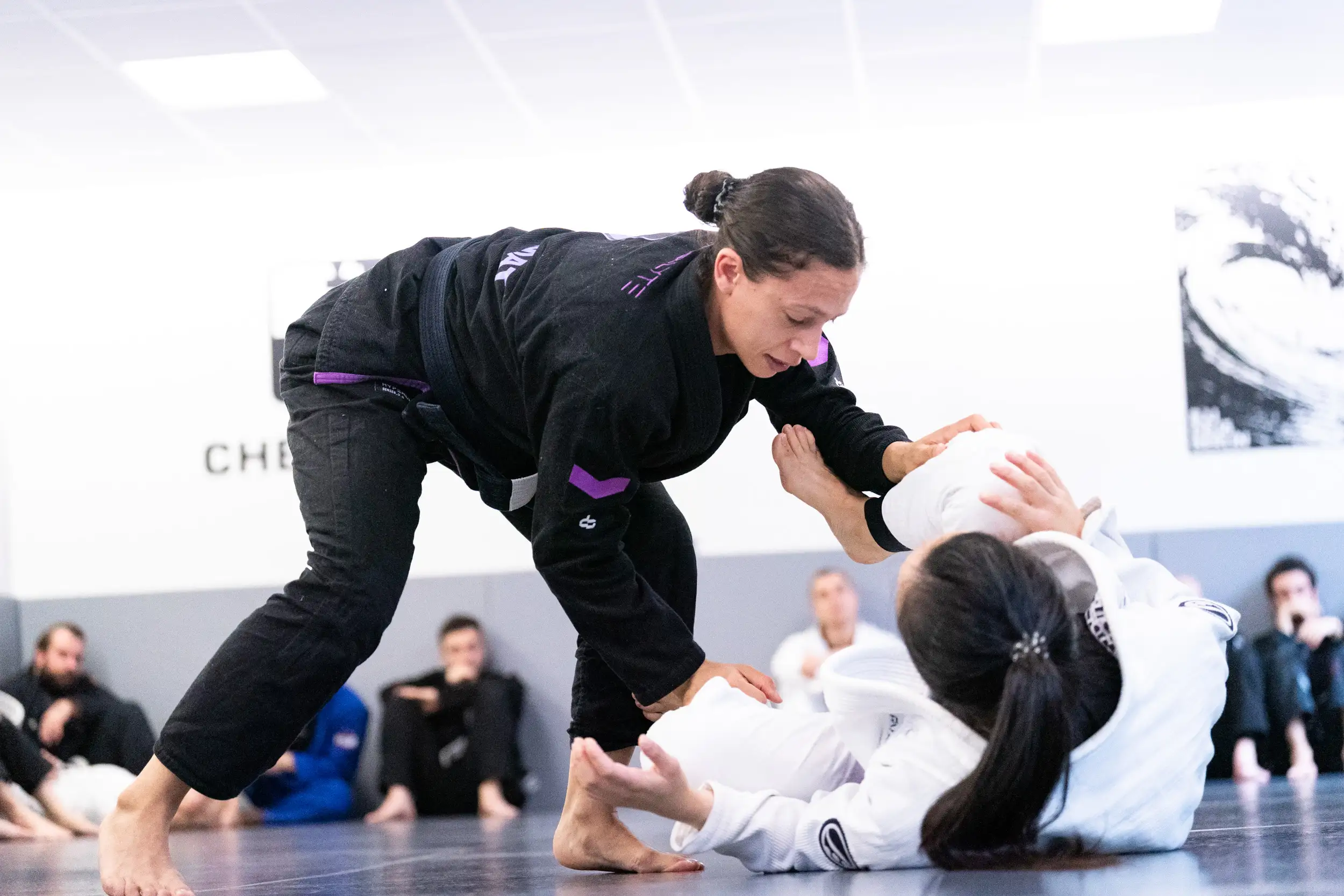
- Real resistance: in sparring your partner really fights back. You learn what works, not just what looks good in theory.
- Safe on the ground: many assaults end up on the ground or against a wall. That’s exactly where BJJ lives: escaping, getting up, creating distance.
- Pressure and adrenaline: you get used to breathing and thinking under pressure – maybe the most important skill of all.
BJJ compared with other options
| BJJ | Krav Maga | Short self-defence course | |
|---|---|---|---|
| Focus | Control, escapes, groundwork | Fast defence, strikes, kicks | Individual techniques, awareness |
| Training against full resistance | Every class | Depends on the school | Rarely |
| Strength needed | Little | Medium | Little |
| Long-term effect | Yes, with regular training | Yes, with regular training | Little without further training |
Every approach has value. A workshop can raise awareness and is a good first step – but it doesn’t replace regular training. From time to time we invite guest coaches for exclusive self-defence workshops for women, most recently Coach Rose. They’re a complement, not a substitute.
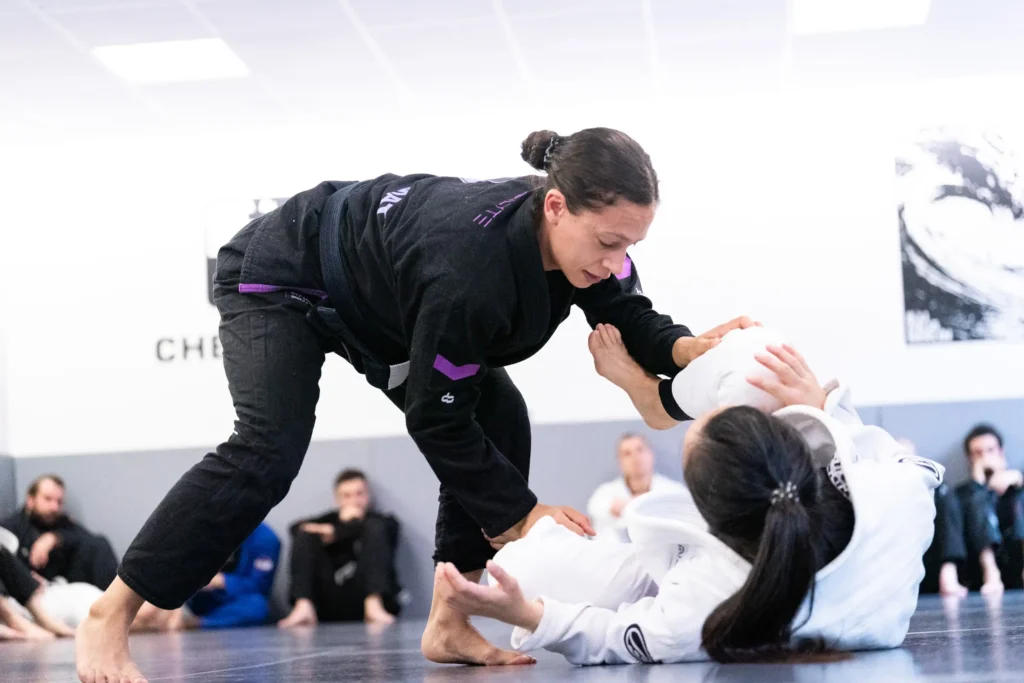
The women’s class – and then?
Our Saturday women’s class is a great way into BJJ: among women, at a calm pace, with coaches who are athletes themselves and compete. Many women feel more comfortable starting there.
But I’ll be honest: the real reward comes when you also train with bigger, heavier, stronger partners – in the mixed classes – and maybe even compete. That’s where you learn to handle the kind of pressure an attacker applies. It’s not a must, but it’s the path that truly makes you safer.
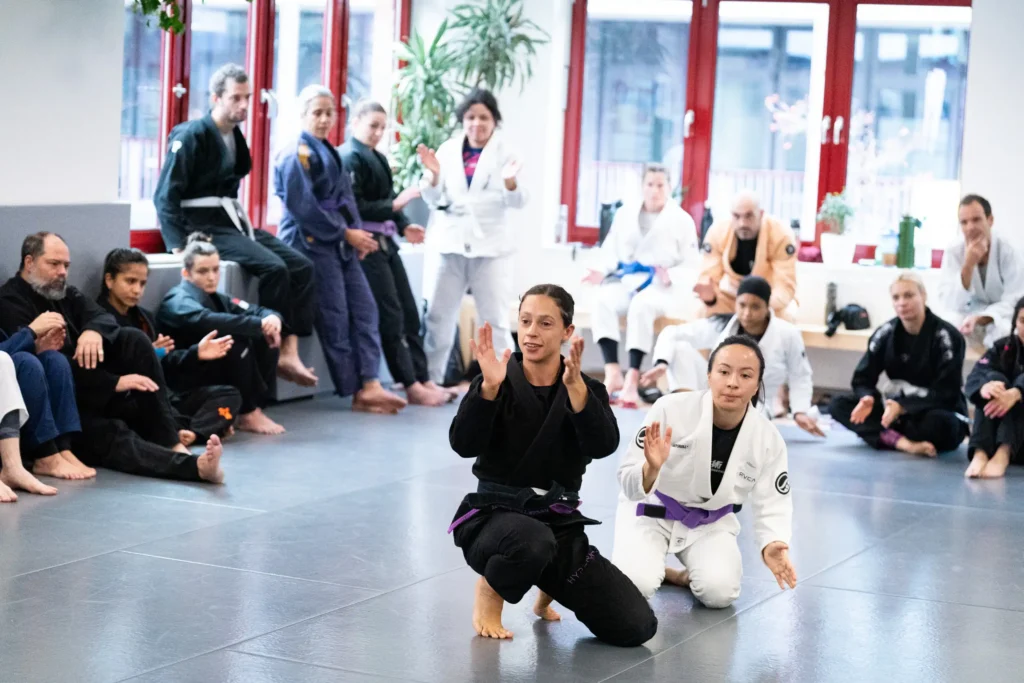
What else BJJ gives women
Confidence that’s real. Not from a motivational quote, but because you know you can escape a bad position – you’ve done it a hundred times.
Fitness without a gym. Strength, endurance and mobility come along the way.
Community. On the mat you get to know and trust people quickly. Plenty of friendships start right here.
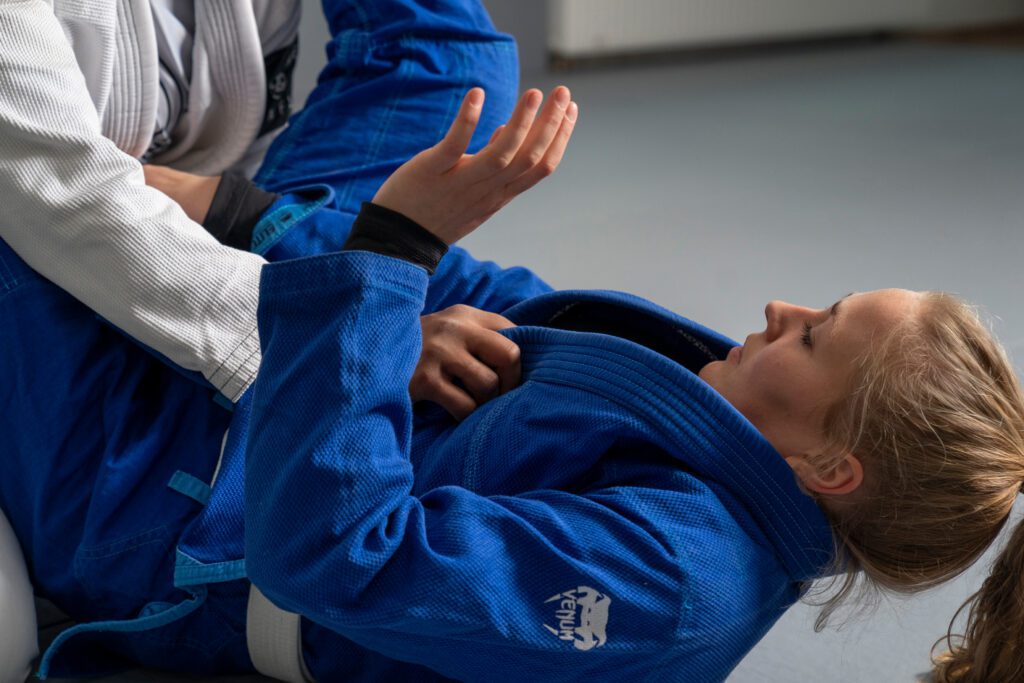
How to start
- Book a trial class – the women’s class or a beginners class. Sportswear with long trousers is enough.
- Come twice a week – that’s what makes techniques stick.
- After a few months, try the mixed classes too.
More on getting started: What is BJJ? and Is BJJ hard?
Frequently asked questions
What is the best self-defence for women?
The one you train regularly against real resistance. Brazilian Jiu-Jitsu is particularly well suited because it relies on technique rather than strength and lets you spar under realistic pressure.
Is a self-defence course for women enough?
A course can raise awareness and show first techniques. But under real stress, only movements you’ve repeated many times work. A course is a good start, not a replacement for regular training.
Can a woman defend herself against a stronger man with BJJ?
BJJ gives you the best chance because it works with leverage, positions and timing. There are never guarantees in self-defence – but women who regularly train with bigger partners are far better prepared.
Do I need experience or fitness for the women’s class?
No. Most women start with no experience. Fitness and technique come with training.
Is BJJ dangerous for women?
The injury risk is low: there’s no striking and you can tap at any time. Good academies train with control and pay attention to differences in size and experience.
What should I wear to my first class?
Comfortable sportswear with long trousers and a fitted top. Take off jewellery and keep nails short. You only need a BJJ uniform (gi) later.
Women’s BJJ in Berlin-Kreuzberg
At BJJ DOJO Berlin, women train every Saturday in the women’s class and in all mixed classes – in English and German. No experience? You can also start in our beginners course. Book a free trial class →