Short answer: When a child “doesn’t feel like” jiu-jitsu anymore, there’s usually insecurity behind it – a plateau, comparing themselves with others, or a tough phase. Don’t let them quit on the spot: talk to your child and the coach, agree on a clear period (say, until the end of term) and then decide together. Quitting is right when there’s lasting fear or a real conflict – not because of one bad month.
By Rodrigo Fernandes, Brazilian 3rd-degree black belt who has taught kids and teens for more than 15 years – Head Coach at BJJ DOJO Berlin (Checkmat).
A small decision with big consequences
Sooner or later many parents ask themselves whether to let their child stop jiu-jitsu when the motivation suddenly disappears. At first glance it seems harmless – kids should enjoy what they do. But it’s worth looking closer. Brazilian Jiu-Jitsu is more than a sport: it’s a place where kids learn to deal with frustration, effort and their own development. That’s why this decision has long-term effects that are often underestimated.
Why “I don’t feel like it” isn’t reason enough
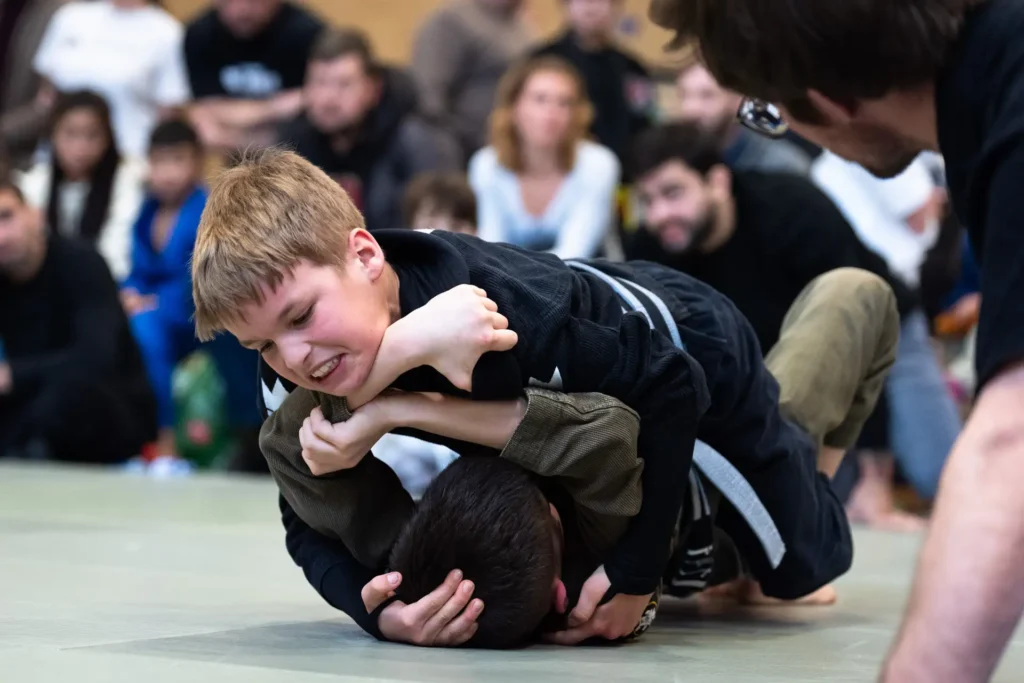
In most cases “I don’t feel like it” doesn’t mean lack of interest – it means insecurity. Kids can’t yet put complex feelings into words. Often there’s overwhelm, self-doubt or comparison with others behind it.
In jiu-jitsu especially, there comes a point after the beginning where progress slows down. Techniques need patience, and success no longer comes automatically. Many kids experience this phase as personal failure, even though it’s a normal part of any learning process.
Comparing themselves with others: an invisible weight
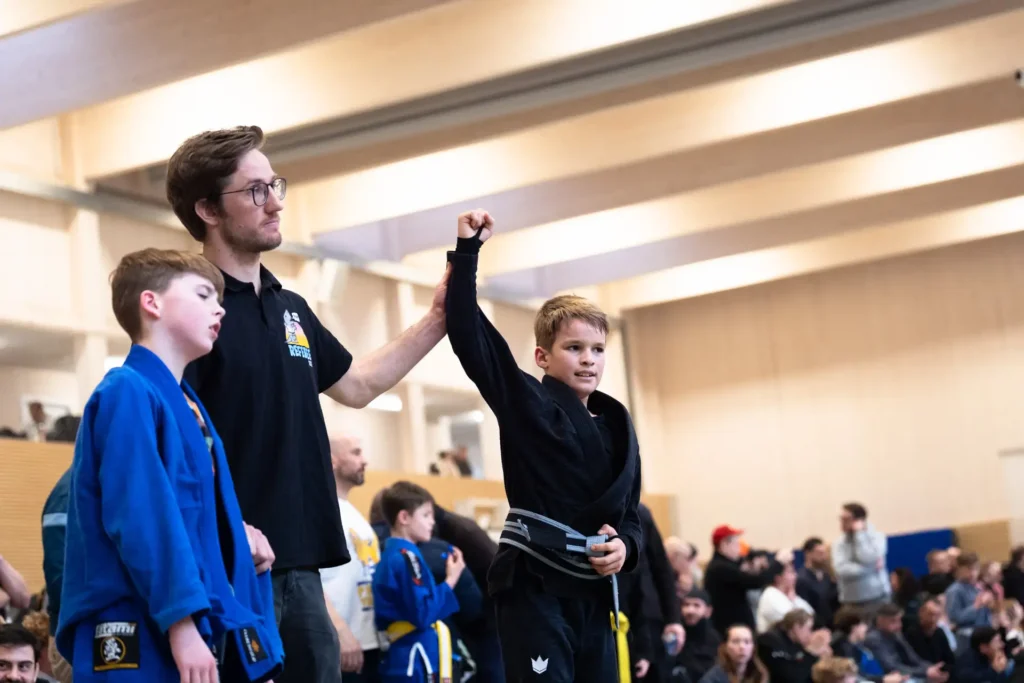
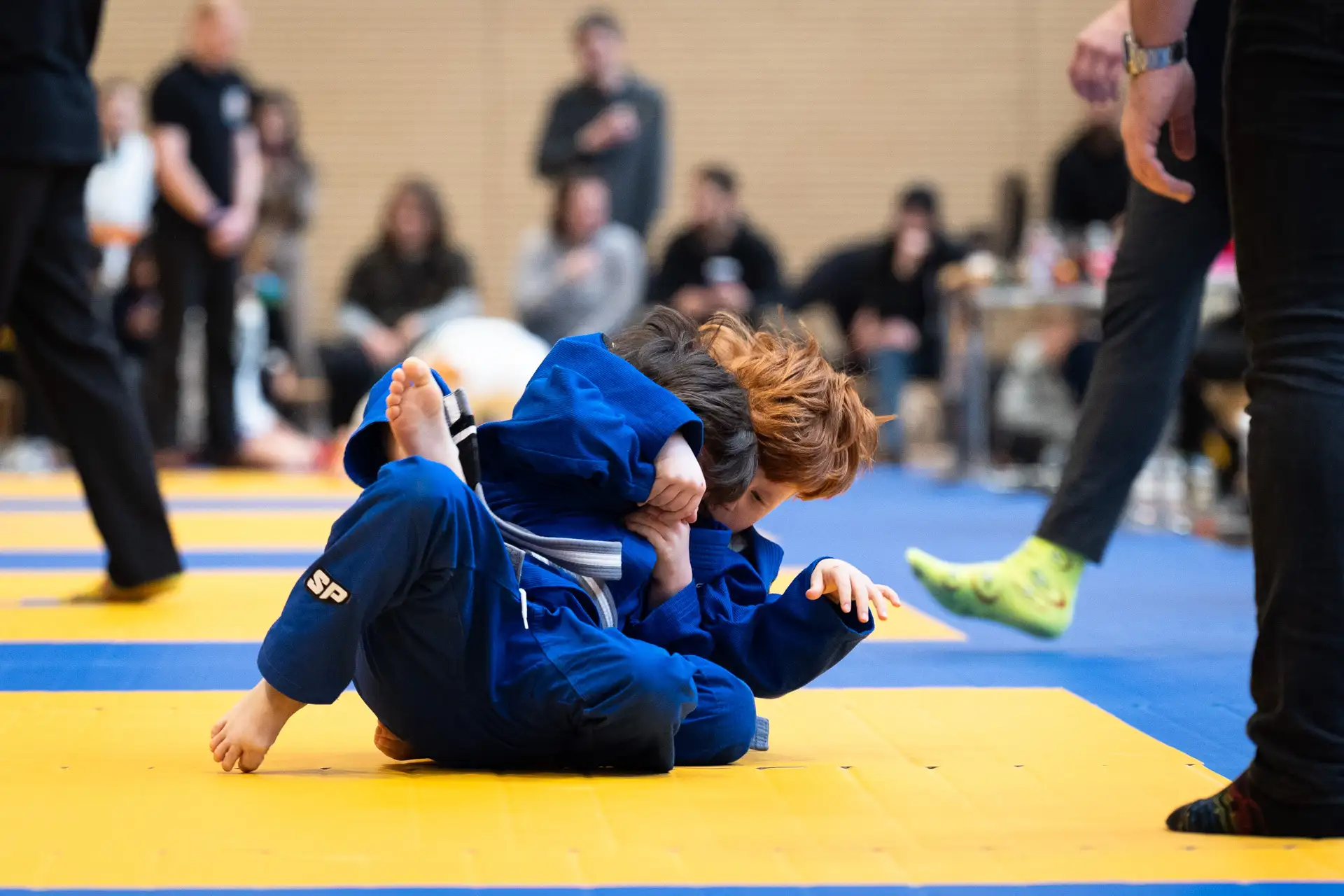
Unlike in many team sports, performance in martial arts is felt directly. Kids notice very quickly who is stronger or more advanced. Without someone putting it into perspective, their self-image can suffer.
At the same time, jiu-jitsu teaches a valuable lesson: everyone develops at their own pace. But kids only learn this if they spend enough time on the mat. Quitting too early takes away the chance to have exactly that experience.
Understand the easy way out – but don’t make it the standard
It’s human to choose the easy path. Screens offer kids distraction without effort at any time. Compared with that, training feels demanding and sometimes uncomfortable.
But kids can’t yet judge long-term benefits for themselves. That’s where parents come in. Guidance doesn’t mean force; it means direction. Decisions shouldn’t depend only on short-term motivation.
When it makes sense to let a child quit
There are situations where stopping is the right call: lasting fear, unresolved conflicts in training, or ongoing emotional overload. In those cases an open conversation with the coach is essential.
Experience shows, though, that these situations are much rarer than parents think. Most of the time it’s a temporary dip in motivation that’s part of growing up.
What jiu-jitsu teaches kids in the long run
Jiu-jitsu doesn’t just teach kids techniques – it teaches attitudes. They learn to lose without falling apart. They learn that controlling emotions matters more than raw strength. They develop respect – not as an empty word, but as something lived. And they build confidence based on real experience, not on praise without substance.
None of this can be taught in theory. It only grows through facing challenges again and again – and finding out that you can handle them.
The quiet risk of giving up too fast
Giving up is rarely recognised as a pattern while it’s still small. But strategies that work in childhood get repeated in adult life. Someone who learns early to avoid difficulty by withdrawing often reaches for the same solution later – at school, at work or in relationships.
That doesn’t mean kids have to finish everything they start. But they should learn that decisions are made consciously, not in a moment of reluctance.
The parents’ role
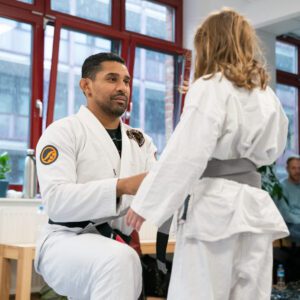
Caring for a child doesn’t mean clearing every obstacle out of the way. It means walking with them through obstacles. Listening is essential – and so is leading. A child who learns that difficulties can be faced together gains lasting stability.
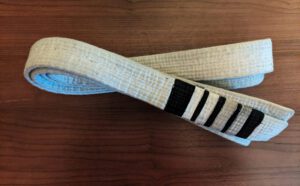
What helps: clear time frames after which you reflect together, naming progress beyond winning, and regular contact with the coach. That turns a possible drop-out into a conscious step in development.
It’s not the sport that matters most – it’s the attitude
Jiu-jitsu isn’t a cure-all. But it’s an environment where kids can learn what perseverance, self-control and responsibility mean. So the question isn’t whether a child always has to have fun – it’s what they should learn when the fun is missing for a while.
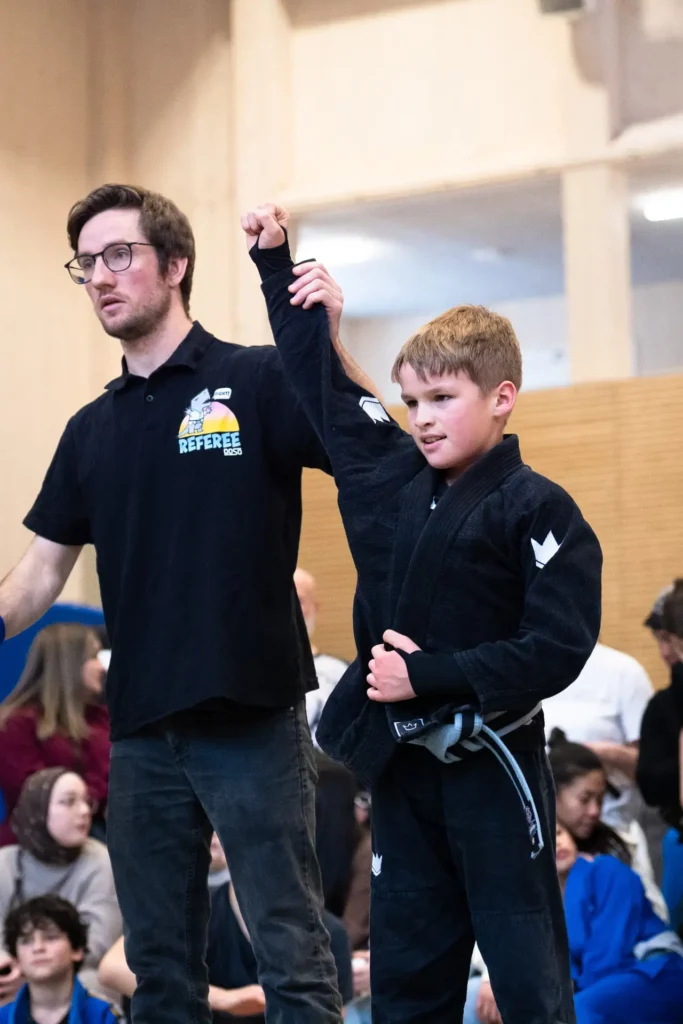
The decision to take a child out of jiu-jitsu shouldn’t come from short-term relief, but from long-term thinking. That’s the difference between raising a child and simply keeping them busy.
Frequently asked questions
Should I make my child stay in martial arts?
Force rarely helps; guidance does. Agree on a clear time frame, talk to the coach and point out progress. Then decide together – consciously, not in a bad moment.
Why does my child suddenly not want to go to training?
Often because of a plateau, comparing themselves with stronger kids, a new belt with higher expectations, or simply tiredness. Real lack of interest is less common.
When is quitting the right decision?
When there’s lasting fear, an unresolved conflict in the group or ongoing overload. Then an open talk with the coach is the first step.
How can I motivate my child without pressure?
Make progress visible beyond winning, watch a class now and then, set small goals (like the next stripe) and show genuine interest. Sometimes a friend who trains too makes all the difference.
How often should a child train jiu-jitsu?
Once or twice a week is ideal for most kids – enough for fun and visible progress.
Kids BJJ in Berlin-Kreuzberg
At BJJ DOJO Berlin, kids from 4 to 15 train in age groups – with coaches who are parents themselves, in English and German. More on the topic: Martial arts for kids: more than winning or losing. More about our kids programme →
Further reading: Research article on PubMed Central (NIH)